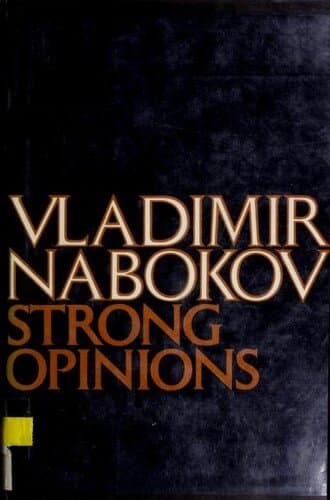
← back to the catalogue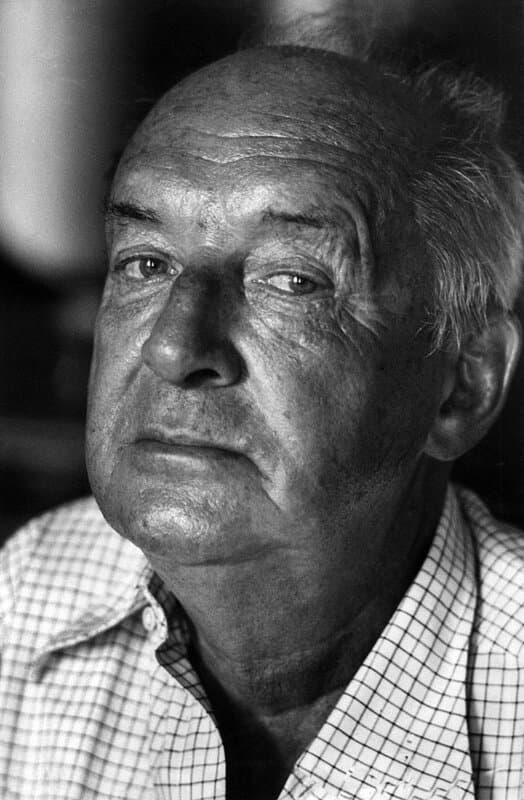
› reshelve this entry
See something off? The librarian reads these on Sundays. Wrong cover, wrong details, a duplicate of another entry — let us know and we’ll sort it.
Author file · 00969
Vladimir Nabokov
1899–1977
On Vladimir Nabokov
A brief life
Vladimir Nabokov was born in 1899 in Saint Petersburg to a wealthy, aristocratic family, fleeing Russia following the 1917 Revolution. He lived as an exile in Berlin, Paris, and eventually the United States, where he transitioned from writing in Russian to English. He spent his final decades in Montreux, Switzerland, residing in the Palace Hotel until his death in 1977.
On the page
His oeuvre spans intricate Russian-language novels, masterful English prose, and rigorous literary criticism. Key works include the controversial 'Lolita', the metafictional 'Pale Fire', and the memoir 'Speak, Memory', all characterized by linguistic virtuosity, unreliable narrators, and complex structural puzzles. His writing consistently explores the interplay between memory, artifice, and the cruelty of desire.
In their time
During his lifetime, Nabokov was celebrated as a stylist of the highest order, though his work frequently ignited moral outrage and censorship battles. 'Lolita' was initially rejected by multiple American publishers before becoming a global sensation, cementing his reputation as a provocateur. Critics remained divided between those who saw his work as cold, aestheticized gamesmanship and those who hailed him as the preeminent prose master of the twentieth century.
The afterlife
Nabokov remains a foundational figure in postmodern literature, revered for his uncompromising commitment to the autonomy of the imagination. His influence persists in the works of contemporary writers who utilize unreliable narration, self-referential structures, and dense, allusive prose. He is widely considered the definitive bridge between the Russian literary tradition and the modern American novel.
Works in the catalogue · 1 entered
The collected
1 copy on offer
Preoccupied with
Recurring motifs



In conversation with