← back to the catalogue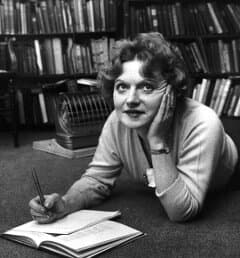
› reshelve this entry
See something off? The librarian reads these on Sundays. Wrong cover, wrong details, a duplicate of another entry — let us know and we’ll sort it.
Author file · 00890
Muriel Spark
1918–2006
On Muriel Spark
A brief life
Muriel Spark was born Muriel Sarah Camberg in 1918 in Edinburgh, Scotland. Following a brief, unhappy marriage in Southern Rhodesia, she returned to London during the Second World War, where she worked for the Intelligence Corps and later became a prolific literary journalist and editor. She converted to Catholicism in 1954, a pivotal shift that deeply informed the metaphysical architecture of her subsequent fiction.
On the page
Spark’s career is defined by a sharp, economical prose style that often subverts the conventions of the traditional novel. Her most celebrated work, The Prime of Miss Jean Brodie, exemplifies her signature use of non-linear time and detached, god-like narration. Her bibliography, spanning twenty-two novels including The Comforters and The Driver's Seat, consistently explores the intersection of spiritual predestination and human artifice.
In their time
Her work was immediately recognized for its wit and technical audacity, earning her a place at the forefront of the post-war British literary scene. While some critics found her clinical detachment unsettling, she was widely lauded for her stylistic precision and moral complexity. She was shortlisted for the Booker Prize several times and received the James Tait Black Memorial Prize.
The afterlife
Spark remains a towering figure in twentieth-century literature, celebrated for her influence on the development of the postmodern novel. Her ability to balance dark comedy with profound theological inquiry continues to attract new generations of readers. She is regarded as a master of the short, crystalline narrative, and her works remain essential reading for those interested in the craft of unreliable narration.
Works in the catalogue · 2 entered
The collected
1 copy on offer
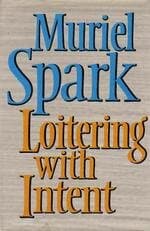
Loitering with Intent
Muriel Spark · 1981
1 copy on offer
Preoccupied with
Recurring motifs



In conversation with