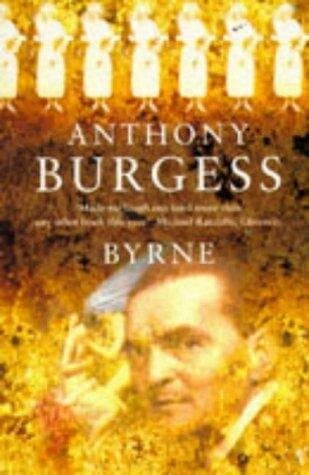
Byrne
Anthony Burgess · 1997
Books from independent sellers worldwide
See something off? The librarian reads these on Sundays. Wrong cover, wrong details, a duplicate of another entry — let us know and we’ll sort it.
Author file · 00281
1917–1993
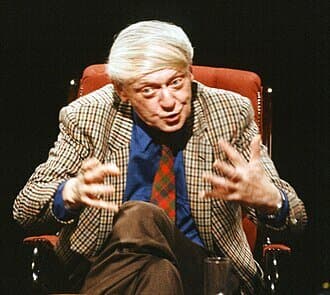
On Anthony Burgess
A brief life
Born John Anthony Burgess Wilson in 1917 in Manchester, England, he was raised in a Catholic household and educated at the University of Manchester. Following a diagnosis of an inoperable brain tumor in 1959, he began writing prolifically to provide for his wife, though the diagnosis was later proven incorrect. He spent much of his adult life as an expatriate in Southeast Asia, the Mediterranean, and the United States, working as a teacher, composer, and literary critic.
On the page
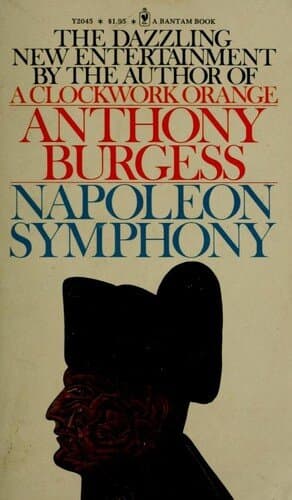
Burgess was a polymathic novelist whose work is defined by linguistic experimentation, dark satire, and an obsession with the mechanics of free will. His most famous work, A Clockwork Orange, introduced a unique invented slang known as Nadsat, while his Earthly Powers stands as a sprawling, ambitious examination of twentieth-century history. His bibliography spans over thirty novels, including the Enderby quartet and the Napoleon Symphony, often blending high-brow intellectualism with pulp sensibilities.
In their time
His career was marked by both immense critical acclaim and significant public controversy, particularly following the 1971 film adaptation of A Clockwork Orange. While many critics lauded his linguistic virtuosity and encyclopedic knowledge, others found his work overly didactic or cynical. He was a constant presence in the literary press, known for his acerbic reviews and his refusal to be categorized by any single genre or movement.
The afterlife
Burgess remains a towering figure of the post-war British novel, celebrated for his influence on speculative fiction and his mastery of the English language. His legacy is sustained by the ongoing study of his linguistic inventions and his role as a bridge between the modernist tradition and the postmodern era. He is remembered as a writer who treated the novel as a laboratory for both moral philosophy and musical composition.
Works in the catalogue · 2 entered
Anthony Burgess · 1997
Preoccupied with
In conversation with