← back to the catalogue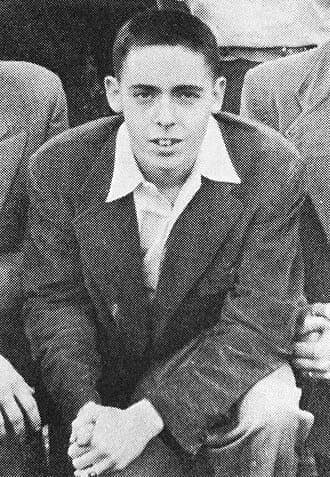
› reshelve this entry
See something off? The librarian reads these on Sundays. Wrong cover, wrong details, a duplicate of another entry — let us know and we’ll sort it.
Author file · 04865
Thomas Pynchon
1937–
On Thomas Pynchon
A brief life
Born in 1937 in Glen Cove, New York, Thomas Pynchon attended Cornell University before serving in the U.S. Navy. Following a brief stint as a technical writer for Boeing, he retreated from public life, becoming one of the most elusive figures in American letters. He spent his formative writing years in Mexico and California, absorbing the countercultural currents that would define his sprawling narratives.
On the page
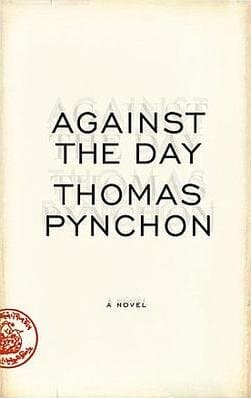
Pynchon’s oeuvre is defined by maximalist prose, intricate paranoia, and the collision of high science with low-brow slapstick. His seminal works, including V., The Crying of Lot 49, and Gravity's Rainbow, navigate the entropic decay of systems and the hidden histories of the twentieth century. His later novels, such as Mason & Dixon and Against the Day, expand this scope into historical revisionism and global conspiracy.
In their time
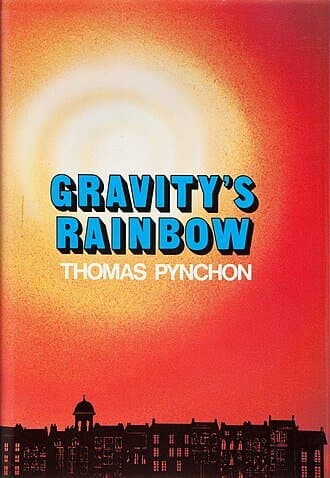
Upon the publication of Gravity's Rainbow in 1973, Pynchon was immediately hailed as a titan of postmodern literature, winning the National Book Award. While his dense, encyclopedic style alienated some mainstream critics, he garnered a cult following that elevated his work to the status of a literary puzzle. His refusal to engage with the media only intensified the scholarly scrutiny of his texts.
The afterlife
Pynchon stands as the architect of the contemporary paranoid epic, having fundamentally altered the trajectory of the American novel. His influence is pervasive in the works of writers who grapple with the intersection of technology, history, and mass media. He remains a central, if spectral, figure in the canon of twentieth-century literature, with his books serving as perennial touchstones for literary maximalism.
3 volumes cataloguedWikipedia ↗
Works in the catalogue · 3 entered
The collected
Preoccupied with
Recurring motifs



In conversation with