
← back to the catalogue
› reshelve this entry
See something off? The librarian reads these on Sundays. Wrong cover, wrong details, a duplicate of another entry — let us know and we’ll sort it.
Author file · 00557
William Gibson
1914–2008
On William Gibson
A brief life
William Gibson was born in 1948 in Conway, South Carolina, and spent his formative years in the American South before relocating to Vancouver, British Columbia, in the late 1960s. This migration from the rural United States to the urban Pacific Northwest provided the outsider perspective that would define his literary sensibility. He emerged from the underground science fiction scene of the 1970s to become a defining voice of the digital age.
On the page
Gibson’s career is defined by the Sprawl trilogy, beginning with the seminal 1984 novel Neuromancer, which codified the aesthetic of cyberpunk. His work evolved from high-octane digital noir into the grounded, near-future realism of the Blue Ant and Jackpot trilogies. His prose is characterized by dense, technical jargon, a preoccupation with the commodification of culture, and the blurring of boundaries between human consciousness and machine intelligence.
In their time
Upon the publication of Neuromancer, Gibson was immediately hailed as a visionary who had successfully predicted the cultural impact of the internet before its mainstream adoption. While early critics occasionally dismissed his work as mere genre fiction, his influence quickly permeated academia, design, and technology journalism. He received the Hugo, Nebula, and Philip K. Dick Awards, cementing his status as a literary heavyweight who transcended the limitations of science fiction.
The afterlife
Gibson’s legacy is found in the very architecture of the modern world, as his neologisms—most notably 'cyberspace'—have become standard vocabulary. He remains a primary reference point for any discussion regarding the intersection of late-stage capitalism and emerging technology. His ability to capture the 'future that is already here' ensures that his body of work continues to be read as both a historical artifact of the 1980s and a prescient guide to the twenty-first century.
Works in the catalogue · 5 entered
The collected
1 copy on offer
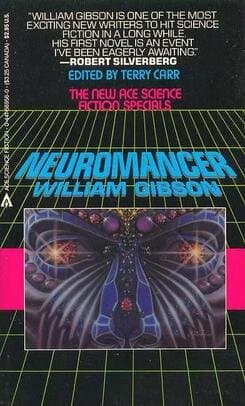
Neuromancer
1 copy on offer
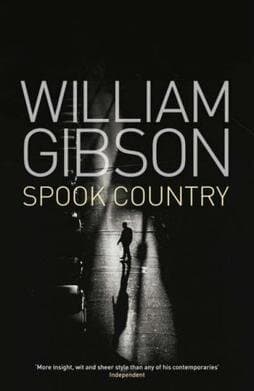
Spook Country
William Gibson · 2007
1 copy on offer
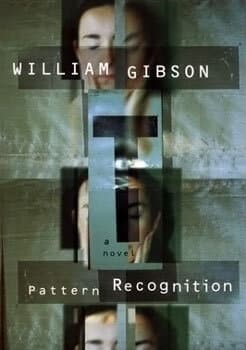
Pattern Recognition
William Gibson · 2003
1 copy on offer
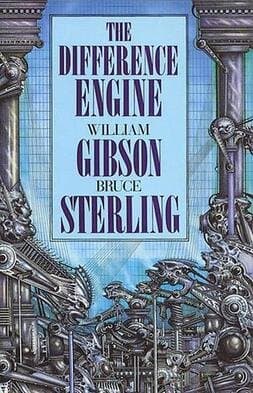
The Difference Engine
Bruce Sterling · William Gibson · 1991
1 copy on offer
Preoccupied with
Recurring motifs



In conversation with