← back to the catalogue
› reshelve this entry
See something off? The librarian reads these on Sundays. Wrong cover, wrong details, a duplicate of another entry — let us know and we’ll sort it.
Author file · 01456
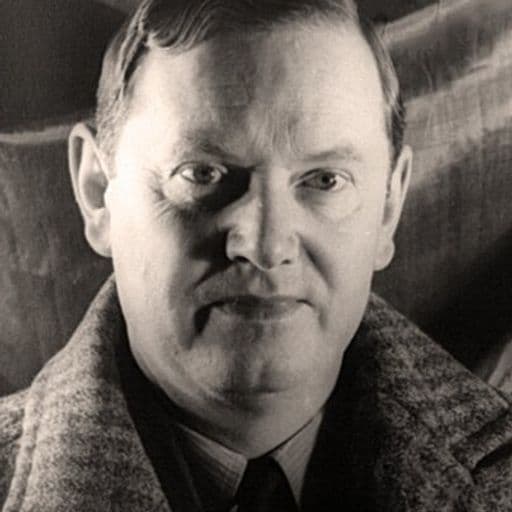
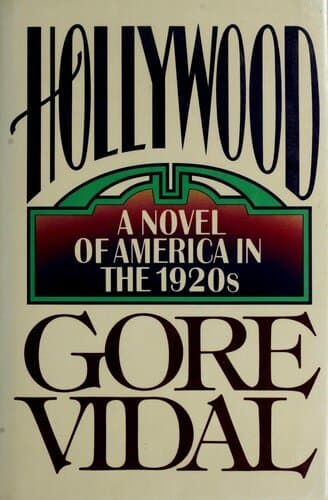
Gore Vidal
1925–2012
On Gore Vidal
A brief life
Born in 1925 at the United States Military Academy at West Point, Gore Vidal was the scion of a prominent political family. He spent his formative years in Washington, D.C., before serving in the Army during World War II and eventually settling into a lifelong residency in Ravello, Italy. He died in 2012, having cultivated a persona as the preeminent American man of letters and a sharp-tongued critic of the political establishment.
On the page
Vidal’s vast bibliography spans historical fiction, acerbic social satire, and incisive political essays. His 'Narratives of Empire' series, including 'Burr' and 'Lincoln', meticulously deconstructs the American mythos through the eyes of its architects. His earlier works, notably 'The City and the Pillar', broke significant ground in the depiction of homosexuality in mid-century literature.
In their time
Throughout his career, Vidal was a polarizing figure, celebrated for his wit and feared for his polemical television appearances. While his historical novels were commercial successes and critical darlings, his non-fiction often drew the ire of the political class he scrutinized. He was a frequent target of conservative critics, yet he maintained a devoted readership that valued his stylistic precision and intellectual independence.
The afterlife
Vidal remains the definitive chronicler of the American political psyche, his work serving as a primary text for understanding the intersection of power and personality. His influence persists in the tradition of the public intellectual, and his novels continue to be studied for their structural rigor and cynical clarity. He is remembered as a master of the English sentence and a tireless interrogator of the American experiment.
Works in the catalogue · 3 entered
The collected
Preoccupied with
Recurring motifs


In conversation with