← back to the catalogue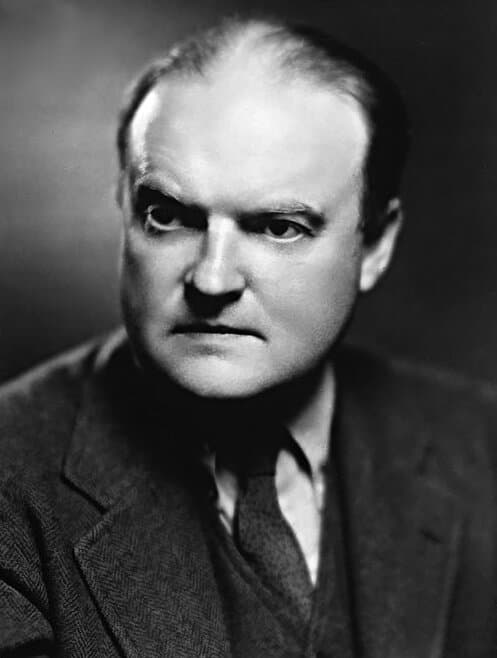
› reshelve this entry
See something off? The librarian reads these on Sundays. Wrong cover, wrong details, a duplicate of another entry — let us know and we’ll sort it.
Author file · 00722
Edmund Wilson
1895–1972
On Edmund Wilson
A brief life
Edmund Wilson was born in 1895 in Red Bank, New Jersey, and died in 1972 in Talcottville, New York. Educated at Princeton, he served as an ambulance driver during the First World War before embarking on a career as the preeminent American man of letters. He spent his life moving between the literary salons of Greenwich Village and his ancestral stone house in the Mohawk Valley.
On the page
Wilson’s output spanned decades, ranging from the seminal literary history 'Axel's Castle' to the exhaustive historical narrative 'Patriotic Gore'. His work functioned as a bridge between high modernism and the American public, characterized by a rigorous, unsentimental prose style. He was equally adept at analyzing the Symbolist movement as he was at documenting the social upheavals of the Great Depression.
In their time
During his lifetime, Wilson was the undisputed arbiter of American literary taste, holding positions at The New Republic and The New Yorker. While his critical authority was immense, his later work, particularly his tax-evasion controversies and his blunt assessments of American foreign policy, occasionally drew sharp public censure. He was awarded the Presidential Medal of Freedom in 1963, cementing his status as a national institution.
The afterlife
Wilson remains the standard-bearer for the public intellectual in America, representing a model of critical engagement that has largely vanished from contemporary media. His influence persists in the way scholars approach the intersection of biography, history, and literature. Modern readers continue to turn to his journals and essays as the definitive record of the twentieth-century American literary landscape.
Works in the catalogue · 2 entered
The collected
1 copy on offer
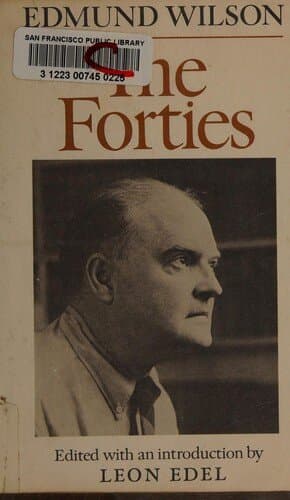
The Forties
1 copy on offer
Preoccupied with
Recurring motifs



In conversation with