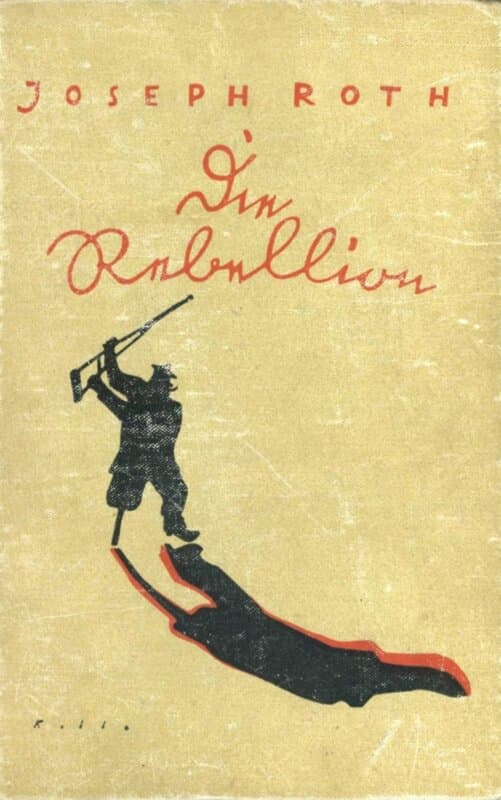
Rebellion
Joseph Roth · 1999
Books from independent sellers worldwide
See something off? The librarian reads these on Sundays. Wrong cover, wrong details, a duplicate of another entry — let us know and we’ll sort it.
Author file · 06093
1894–1939
On Joseph Roth
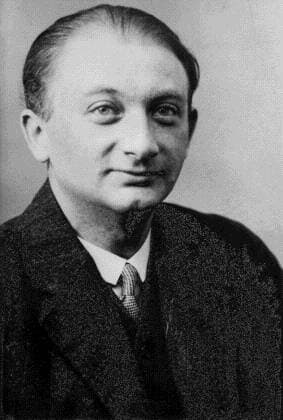
A brief life
Joseph Roth was born in 1894 in Brody, Galicia, then part of the Austro-Hungarian Empire. He served in the Imperial Army during World War I, an experience that shattered his worldview and fueled his lifelong obsession with the lost stability of the Habsburg monarchy. He spent his final years in Parisian exile, struggling with alcoholism and poverty before his death in 1939.
On the page
Roth’s bibliography is defined by a melancholic elegy for a vanished world, most notably in his masterpiece The Radetzky March. His prose captures the disintegration of empires and the displacement of individuals through works like The Emperor's Tomb and Job. He utilized a precise, journalistic style to document the moral decay of post-war Europe and the rise of totalitarianism.
In their time
During his lifetime, Roth was a prominent journalist and novelist, though his work was often overshadowed by the political chaos of the 1930s. His anti-fascist stance made him a target of the Nazi regime, which banned his books and forced him into exile. While he maintained a dedicated circle of intellectual peers, he did not achieve widespread commercial success until well after his death.
The afterlife
Roth is now regarded as one of the essential chroniclers of the twentieth century, with his works serving as a bridge between the nineteenth-century novel and modern existentialism. His influence is visible in the works of writers who grapple with themes of historical trauma and the loss of cultural identity. He remains a cornerstone of Central European literature, frequently rediscovered by new generations of readers.
Works in the catalogue · 1 entered
Joseph Roth · 1999
1 copy on offer
Preoccupied with
In conversation with