← back to the catalogue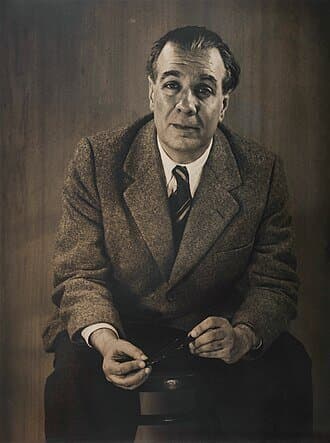
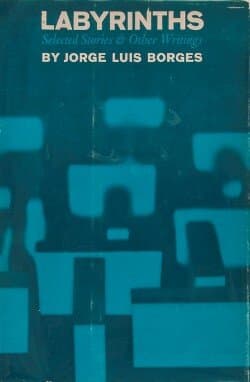
› reshelve this entry
See something off? The librarian reads these on Sundays. Wrong cover, wrong details, a duplicate of another entry — let us know and we’ll sort it.
Author file · 04675
Jorge Luis Borges
1899–1986
On Jorge Luis Borges
A brief life
Jorge Luis Borges was born in Buenos Aires in 1899 and spent his formative years in Geneva, where he mastered the European literary tradition. After returning to Argentina in 1921, he became a central figure in the avant-garde literary circles of Buenos Aires. Despite his progressive blindness, he served as the director of the National Library of Argentina for nearly two decades.
On the page
Borges revolutionized the short story form with collections such as Ficciones and The Aleph. His writing is characterized by a preoccupation with infinity, mirrors, labyrinths, and the intersection of philosophy and fiction. He eschewed the sprawling novel in favor of dense, metaphysical puzzles that challenge the nature of reality and authorship.
In their time
During his lifetime, Borges was largely ignored by the mainstream literary establishment in his home country, where he was often viewed as an eccentric intellectual. International recognition arrived late, culminating in the 1961 International Publishers Prize, which he shared with Samuel Beckett. This award catapulted him to global fame and cemented his status as a master of the postmodern short story.
The afterlife
Borges is widely considered the most influential Latin American writer of the twentieth century. His work fundamentally altered the trajectory of world literature, providing a blueprint for magical realism and metafiction. Writers as diverse as Umberto Eco, Haruki Murakami, and Salman Rushdie cite his work as a foundational influence on their own narrative techniques.
2 volumes cataloguedWikipedia ↗
Works in the catalogue · 2 entered
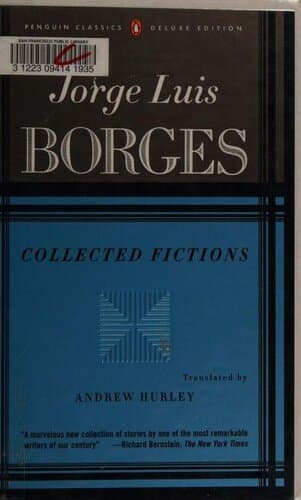
The collected
1 copy on offer
Labyrinths
Jorge Luis Borges · 1984
1 copy on offer
Preoccupied with
Recurring motifs



In conversation with