← back to the catalogue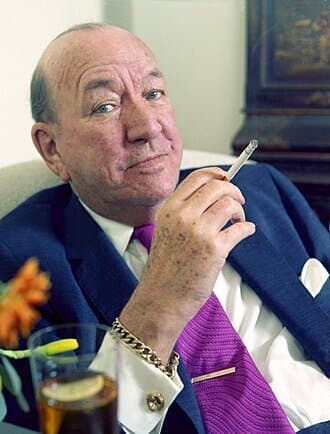
› reshelve this entry
See something off? The librarian reads these on Sundays. Wrong cover, wrong details, a duplicate of another entry — let us know and we’ll sort it.
Author file · 00651
Noël Coward
1899–1973
On Noël Coward
A brief life
Born in 1899 in Teddington, England, Noël Coward emerged from humble beginnings to become the quintessential architect of British theatrical wit. His early career as a child actor provided the foundation for a lifelong mastery of the stage, leading him to dominate the West End and Broadway for decades. He lived a peripatetic life, eventually settling in Jamaica and Switzerland, where he remained a prolific writer until his death in 1973.
On the page
Coward’s output was vast, spanning plays, musicals, screenplays, and cabaret songs. His most celebrated works, including 'Private Lives', 'Blithe Spirit', and 'Hay Fever', utilize razor-sharp dialogue to dissect the manners and hypocrisies of the upper-middle class. His writing is characterized by a sophisticated veneer of cynicism that masks a profound understanding of human loneliness and emotional fragility.
In their time
During his lifetime, Coward was simultaneously celebrated as a national treasure and dismissed by some critics as a superficial purveyor of light entertainment. While his plays were massive commercial successes, he often faced censorship from the Lord Chamberlain’s office for his frank depictions of unconventional relationships. His status as a 'star' sometimes overshadowed his technical brilliance as a dramatist.
The afterlife
Today, Coward is recognized as one of the most influential playwrights of the 20th century, credited with perfecting the comedy of manners for the modern era. His work serves as a primary reference point for the study of mid-century British social mores and theatrical artifice. His songs and plays remain staples of the global repertoire, frequently revived for their enduring relevance and technical precision.
Works in the catalogue · 1 entered
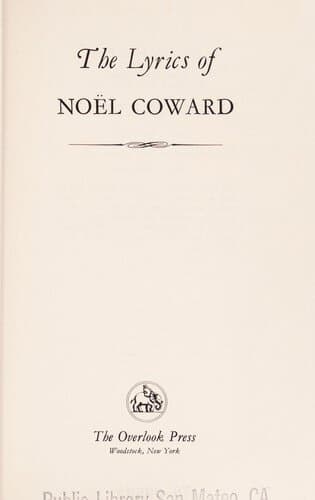
The collected
1 copy on offer
Preoccupied with
Recurring motifs



In conversation with