← back to the catalogue
› reshelve this entry
See something off? The librarian reads these on Sundays. Wrong cover, wrong details, a duplicate of another entry — let us know and we’ll sort it.
Author file · 05511
Nadine Gordimer
1923–2014
On Nadine Gordimer
A brief life
Nadine Gordimer was born in 1923 in Springs, South Africa, to Jewish immigrant parents. She lived in Johannesburg for the duration of her life, witnessing the rise and fall of the apartheid regime from within the country's segregated social fabric. Her commitment to anti-apartheid activism defined her public persona as much as her literary output.
On the page
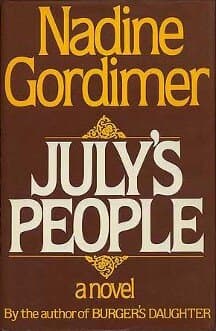
Her body of work, spanning novels like The Conservationist and July's People, serves as a meticulous chronicle of moral decay under systemic racism. She focused on the intersection of private intimacy and political upheaval, often dissecting the psychological compromises made by white liberals. Her prose is characterized by its clinical precision and unflinching examination of complicity.
In their time
Gordimer achieved international acclaim during her lifetime, culminating in the Nobel Prize in Literature in 1991. While her work was frequently banned by the South African government, she was celebrated abroad as the definitive literary voice of the anti-apartheid struggle. Critics often praised her intellectual rigor, though some noted her prose could be demanding and austere.
The afterlife
She remains a central figure in post-colonial literature, studied for her ability to map the internal landscape of a nation in crisis. Her influence persists in the work of contemporary writers who grapple with the ethics of witnessing and the weight of history. Her archive and the enduring relevance of her novels ensure her status as a primary chronicler of the twentieth-century South African experience.
2 volumes cataloguedWikipedia ↗
Works in the catalogue · 2 entered
The collected
1 copy on offer
Jump and Other Stories
1 copy on offer
Preoccupied with
Recurring motifs



In conversation with
