← back to the catalogue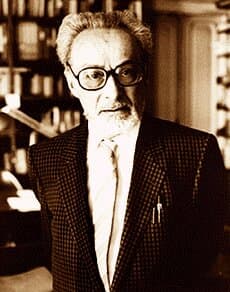
› reshelve this entry
See something off? The librarian reads these on Sundays. Wrong cover, wrong details, a duplicate of another entry — let us know and we’ll sort it.
Author file · 04724
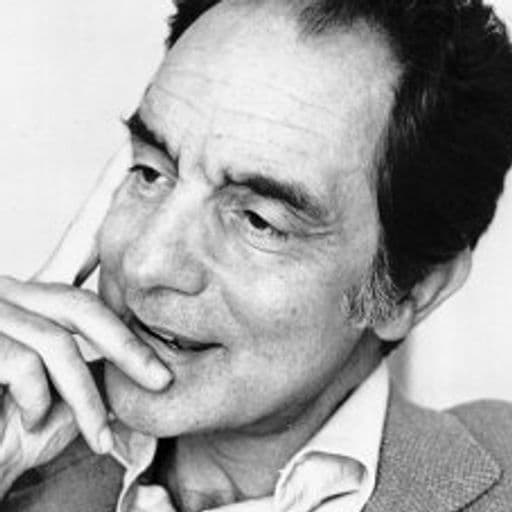
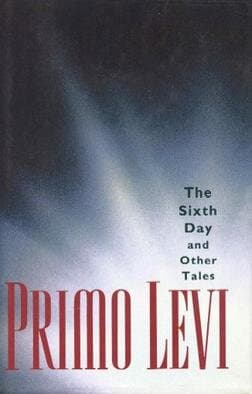
Primo Levi
1919–1987
On Primo Levi
A brief life
Primo Levi was born in Turin in 1919 to a Jewish family, and his life was irrevocably marked by his deportation to Auschwitz in 1944. A trained chemist, he survived the camp by utilizing his professional skills and returned to Italy to chronicle the experience. He lived in Turin for the remainder of his life, working in the chemical industry while writing his major literary works before his death in 1987.
On the page
His body of work centers on the intersection of human endurance and scientific observation, most notably in his memoir 'If This Is a Man' and the subsequent 'The Truce'. His later collections, such as 'The Periodic Table' and 'If Not Now, When?', bridge the gap between technical precision and narrative fiction. His writing is characterized by a stark, lucid prose style that refuses sentimentality in favor of rigorous moral and physical examination.
In their time
His initial manuscript for 'If This Is a Man' was famously rejected by major Italian publishers, including Einaudi, before being released by a small press in 1947 to little notice. It was only upon its republication in the late 1950s that he gained widespread recognition as a vital witness to the Holocaust. By the time of his death, he was celebrated internationally as one of the most important moral voices of the twentieth century.
The afterlife
Levi remains a cornerstone of Holocaust literature and a model for the synthesis of scientific and humanistic inquiry. His influence persists in the work of writers who navigate the ethics of memory and the limits of language. He is widely studied for his ability to maintain objectivity while documenting the most extreme subjective suffering.
1 volume cataloguedWikipedia ↗
Works in the catalogue · 1 entered
The collected
1 copy on offer
Preoccupied with
Recurring motifs



In conversation with