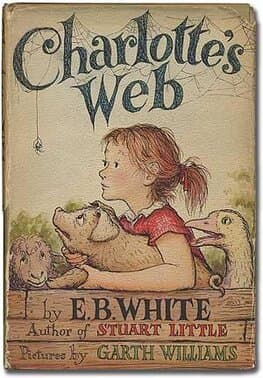
Charlotte's Web
E. B. White · 1952
Books from independent sellers worldwide
See something off? The librarian reads these on Sundays. Wrong cover, wrong details, a duplicate of another entry — let us know and we’ll sort it.
Author file · 03651
1899–1985
On E. B. White
A brief life
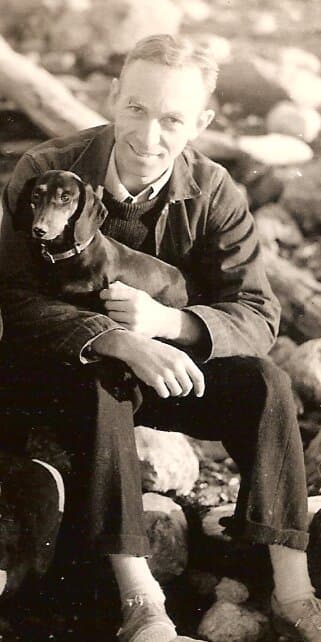
Elwyn Brooks White was born in 1899 in Mount Vernon, New York, and spent his formative years in the rural landscapes that would later define his literary imagination. After graduating from Cornell University, he became a foundational voice at The New Yorker, where his contributions spanned decades and helped establish the magazine's signature wit. He spent much of his later life on a saltwater farm in Maine, observing the natural world with a precision that balanced his sophisticated urban sensibilities.
On the page
White is best known for his three children's classics: Stuart Little, Charlotte's Web, and The Trumpet of the Swan. Beyond his fiction, he was a master of the personal essay, capturing the nuances of American life in collections like One Man's Meat and The Second Tree from the Corner. He also famously revised William Strunk Jr.'s The Elements of Style, cementing his role as the arbiter of clarity in the English language.
In their time
During his lifetime, White was celebrated as a quintessential American stylist, winning the Presidential Medal of Freedom and a special Pulitzer Prize for his body of work. While his children's books achieved immediate, enduring popularity, his essays were praised by critics for their deceptive simplicity and profound moral clarity. He was widely regarded as the conscience of American letters, though he remained famously reclusive and wary of public adulation.
The afterlife
White’s influence persists in the standard of prose he established for generations of journalists and writers. His children's novels remain staples of the literary canon, studied for their seamless integration of anthropomorphism and existential gravity. He is remembered as the definitive voice of the American pastoral, bridging the gap between the rural experience and the complexities of modern intellectual life.
Works in the catalogue · 1 entered
E. B. White · 1952
1 copy on offer
Preoccupied with
In conversation with