← back to the catalogue
› reshelve this entry
See something off? The librarian reads these on Sundays. Wrong cover, wrong details, a duplicate of another entry — let us know and we’ll sort it.
Author file · 03352
Charles P. Murray Jr.
1943–
On Charles P. Murray Jr.
A brief life
Charles A. Murray was born in 1943 in Newton, Iowa, and educated at Harvard University and the Massachusetts Institute of Technology. Following his service in the Peace Corps in Thailand, he transitioned from a career in social science research to a prominent role as a public intellectual and political commentator. His professional life has been defined by his long-standing association with the American Enterprise Institute.
On the page
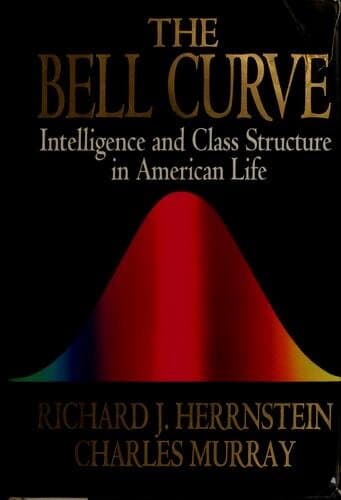
Murray is best known for his provocative analyses of the American social fabric, most notably in 'Losing Ground: American Social Policy, 1950–1980' and 'The Bell Curve: Intelligence and Class Structure in American Life', the latter co-authored with Richard Herrnstein. His writing consistently explores the intersection of public policy, socioeconomic stratification, and the efficacy of the welfare state. Later works, such as 'Coming Apart: The State of White America, 1960–2010', focus on the widening cultural and economic divide within the American middle class.
In their time
His work has frequently sparked intense national debate, drawing both fervent praise from conservative policy circles and sharp condemnation from academic critics. While his early policy critiques were influential in shaping welfare reform legislation in the 1990s, his later sociological arguments regarding intelligence and class have been met with sustained controversy and academic rebuttal. He remains a polarizing figure whose books are central to the discourse on American inequality.
The afterlife
Murray’s influence persists in the ongoing political debates surrounding the American social contract and the causes of poverty. His methodology and conclusions continue to serve as a primary reference point for critics of the modern administrative state. He remains a significant, if contentious, voice in the study of American social stratification.
Works in the catalogue · 1 entered
The collected
Preoccupied with