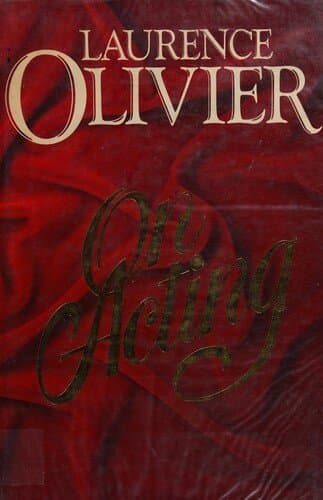
On Acting
Laurence Olivier · 1987
Books from independent sellers worldwide
See something off? The librarian reads these on Sundays. Wrong cover, wrong details, a duplicate of another entry — let us know and we’ll sort it.
Author file · 01995
1907–1989
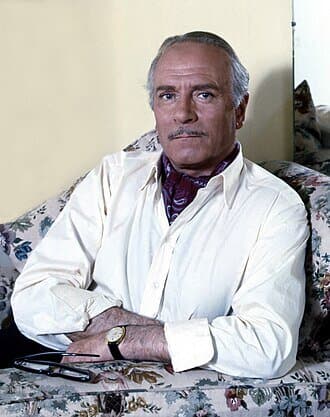
On Laurence Olivier
A brief life
Laurence Olivier was born in 1907 in Dorking, England, and rose to prominence as the definitive Shakespearean actor of the twentieth century. His career spanned six decades, beginning in the repertory theatres of the 1920s and culminating in his tenure as the first artistic director of the National Theatre. He died in 1989, leaving behind a body of work that bridged the gap between the classical stage and the cinematic medium.
On the page
Olivier’s work is defined by his meticulous physical transformation and vocal precision in portraying complex, often tortured protagonists. His most significant contributions include his directed and starring roles in the Shakespearean film trilogy—Henry V, Hamlet, and Richard III—as well as his later, chilling performances in films like Marathon Man. He mastered the art of the 'character mask,' often using prosthetics and distinct gaits to inhabit roles ranging from Heathcliff to Archie Rice.
In their time
During his lifetime, Olivier was hailed as the greatest actor of his generation, earning numerous Academy Awards and international acclaim for his technical virtuosity. While his early stage work was sometimes criticized for being overly mannered, his cinematic adaptations of Shakespeare were lauded for bringing high drama to a mass audience. He was frequently viewed as a titan of the British establishment, though his later career saw him embrace more experimental and gritty roles.
The afterlife
Olivier remains the benchmark against which all modern classical actors are measured, particularly regarding the interpretation of Shakespearean verse. His influence persists through the National Theatre, which he helped establish as a global cultural institution, and his pioneering work in film acting continues to be studied by students of the craft. His legacy is that of the actor-manager, a figure who exerted total creative control over his productions.
Works in the catalogue · 1 entered
Laurence Olivier · 1987
Preoccupied with