← back to the catalogue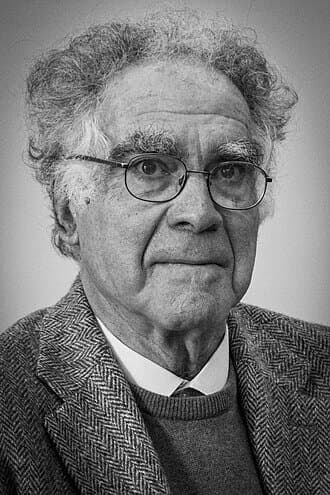
› reshelve this entry
See something off? The librarian reads these on Sundays. Wrong cover, wrong details, a duplicate of another entry — let us know and we’ll sort it.
Author file · 19249
Carlo Ginzburg
1939–
On Carlo Ginzburg
A brief life
Carlo Ginzburg was born in 1939 in Turin, Italy, into a family of prominent anti-fascist intellectuals. His father, Leone Ginzburg, was a literary scholar and resistance hero who died in a Nazi prison, while his mother, Natalia Ginzburg, became one of the most significant Italian novelists of the twentieth century. He spent his academic career teaching at the University of Bologna and UCLA, establishing himself as a foundational figure in the development of microhistory.
On the page
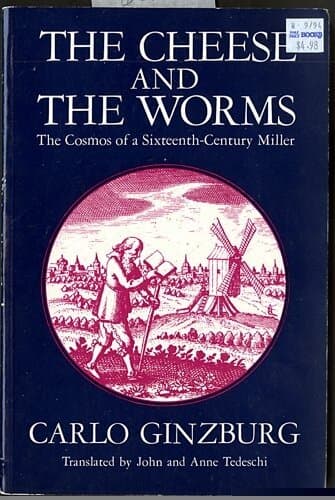
Ginzburg is best known for his pioneering methodology in historical research, which focuses on the lives of marginalized individuals to reveal broader cultural patterns. His seminal work, The Cheese and the Worms, reconstructs the worldview of a sixteenth-century miller, while The Night Battles explores the agrarian cults of Friuli. His writing consistently interrogates the tension between elite culture and popular belief through the lens of judicial records and inquisitorial archives.
In their time
His work was met with immediate acclaim within the historical profession, particularly for its innovative use of anecdotal evidence to challenge structuralist historiography. While some traditional historians initially questioned the representativeness of his micro-studies, he was widely celebrated for his narrative flair and his ability to make complex archival research accessible to a broad, non-academic audience. He received the Aby Warburg Prize and the Balzan Prize for his contributions to European history.
The afterlife
Ginzburg is credited with inventing the field of microhistory, fundamentally altering how historians engage with the past by emphasizing the 'clue' or the 'trace' over statistical aggregation. His influence extends beyond history into literary theory, anthropology, and art history, where his 'evidential paradigm' remains a standard analytical tool. He continues to be a vital voice in debates regarding the nature of historical truth and the ethics of storytelling.
1 volume cataloguedWikipedia ↗
Works in the catalogue · 1 entered
On the shelves
1 copy on offer
Preoccupied with