← back to the catalogue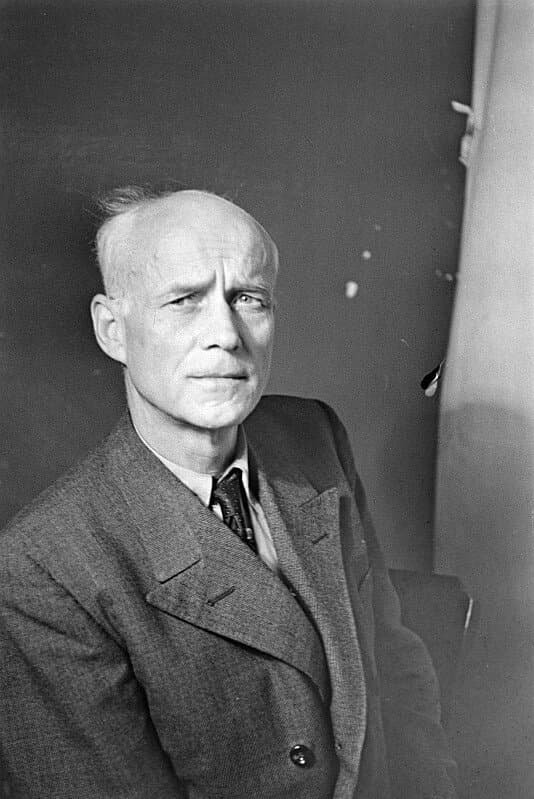
› reshelve this entry
See something off? The librarian reads these on Sundays. Wrong cover, wrong details, a duplicate of another entry — let us know and we’ll sort it.
Author file · 19217
Theodore Plievier
1892–1955
On Theodore Plievier
A brief life
Theodor Plievier was born in Berlin in 1892 and lived a life defined by radical politics and the upheaval of two world wars. A former sailor and itinerant laborer, he became a prominent voice of the German anti-war movement, fleeing the Nazi regime in 1933 to live in exile across Europe, the Soviet Union, and eventually Argentina. He spent his final years in Switzerland, where he died in 1955.
On the page
Plievier is best known for his 'trilogy of catastrophe,' consisting of the novels Stalingrad, Moscow, and Berlin. These works utilize a documentary-fiction style, blending rigorous historical research with the visceral, fragmented experiences of soldiers and civilians caught in the machinery of total war. His writing is characterized by a relentless focus on the dehumanizing effects of military bureaucracy and the physical disintegration of urban landscapes.
In their time
During his lifetime, Plievier’s work was celebrated for its unflinching honesty and its role as a moral indictment of the Third Reich. While his early books were banned by the Nazis, his later war novels achieved international acclaim, particularly in the post-war period, as they provided a harrowing, ground-level perspective on the Eastern Front that resonated with global audiences.
The afterlife
Plievier remains a foundational figure in the literature of the Second World War, credited with pioneering the 'documentary novel' as a tool for historical witness. His influence is seen in the works of subsequent writers who seek to demystify military conflict through the lens of individual suffering. His books continue to be studied as essential, if brutal, accounts of the collapse of the German state.
1 volume cataloguedWikipedia ↗
Works in the catalogue · 1 entered
On the shelves
1 copy on offer
Preoccupied with
Recurring motifs



In conversation with