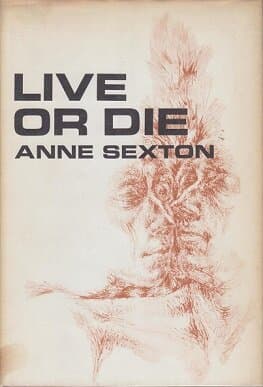
Live or Die
Anne Sexton · 1966
Books from independent sellers worldwide
See something off? The librarian reads these on Sundays. Wrong cover, wrong details, a duplicate of another entry — let us know and we’ll sort it.
Author file · 00127
1928–1974
On Anne Sexton
A brief life
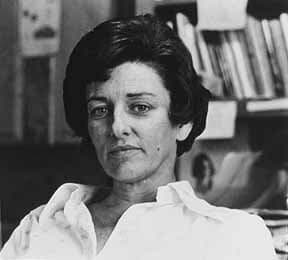
Anne Sexton was born in 1928 in Newton, Massachusetts, and spent much of her life navigating the turbulent waters of suburban domesticity and severe mental illness. Following a postpartum breakdown in 1956, she enrolled in a poetry workshop at the Boston Center for Adult Education, where her talent was quickly recognized by Robert Lowell. Her life ended by suicide in 1974, leaving behind a body of work that transformed the landscape of American verse.
On the page
Sexton’s career began with the publication of To Bedlam and Part Way Back, which established her as a central figure in the confessional movement. Her subsequent collections, including Live or Die and The Book of Folly, explored the visceral realities of the female experience, psychiatric institutionalization, and the complexities of motherhood. Her later work, particularly The Transformations, reimagined classic fairy tales through a dark, feminist, and deeply personal lens.
In their time
During her lifetime, Sexton was both a celebrated literary figure and a polarizing presence. While she won the Pulitzer Prize for Poetry in 1967 for Live or Die, critics often fixated on the biographical nature of her work, frequently dismissing her candid explorations of suicide and sexuality as merely therapeutic or hysterical. Despite these dismissals, she maintained a devoted readership who found profound resonance in her unflinching honesty.
The afterlife
Sexton remains a foundational figure in contemporary American poetry, credited with breaking the silence surrounding mental health and the domestic sphere. Her influence persists in the work of subsequent generations of writers who continue to explore the boundaries of the personal and the political. She is now studied as a master of the lyric form, whose technical precision often belies the raw emotional intensity of her subject matter.
Works in the catalogue · 1 entered
Anne Sexton · 1966
1 copy on offer
Preoccupied with
In conversation with