› reshelve this entry
See something off? The librarian reads these on Sundays. Wrong cover, wrong details, a duplicate of another entry — let us know and we’ll sort it.
Author file · 00760
Nicholas Monsarrat
1910–1979
On Nicholas Monsarrat
A brief life
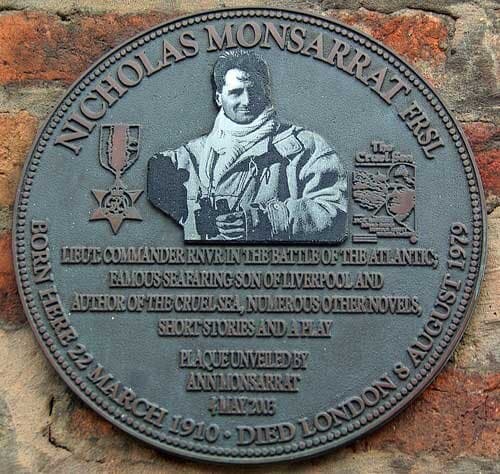
Nicholas Monsarrat was born in Liverpool in 1910 and educated at Cambridge. He served as a Lieutenant Commander in the Royal Navy during the Second World War, an experience that defined his literary output. After the war, he worked for the British Information Services in South Africa and Canada before dedicating himself to full-time writing until his death in 1979.
On the page
His career is anchored by the monumental naval epic The Cruel Sea, which provides a harrowing, technical, and psychological account of the Battle of the Atlantic. His later work, including the sprawling The Tribe That Lost Its Head and The Kappillan of Malta, shifted toward post-colonial critique and historical drama. His prose is characterized by a stark, unsentimental realism and a deep preoccupation with the burdens of command and the erosion of the British Empire.
In their time
The Cruel Sea was an immediate, massive success, becoming one of the most widely read novels of the post-war era and earning a place on the bestseller lists of both Britain and the United States. While his later, more politically charged novels regarding African independence often drew controversy and accusations of racial insensitivity, his reputation as a master of maritime narrative remained secure.
The afterlife
Monsarrat remains the definitive chronicler of the North Atlantic convoys, and his work is frequently cited as the gold standard for naval fiction. His novels continue to be studied for their unflinching depiction of the moral compromises inherent in wartime duty. He is remembered as a bridge between the traditional adventure novel and the more complex, cynical literature of the mid-twentieth century.
Works in the catalogue · 0 entered
The collected
No works yet entered for this author.
Preoccupied with
Recurring motifs


In conversation with
