› reshelve this entry
See something off? The librarian reads these on Sundays. Wrong cover, wrong details, a duplicate of another entry — let us know and we’ll sort it.
Author file · 05016
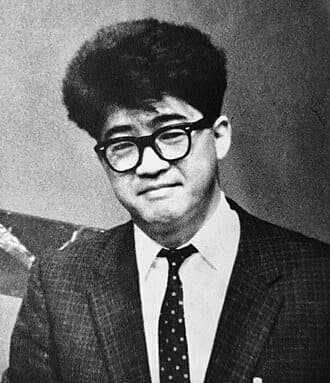
Kōbō Abe
1924–1993
On Kōbō Abe
A brief life
Kōbō Abe (1924–1993) was born in Tokyo but spent his formative years in Manchuria, an experience that instilled in him a lifelong sense of displacement and outsider status. After returning to Japan to study medicine at Tokyo University, he abandoned his medical career to pursue literature and photography. He lived primarily in Tokyo, where he became a central figure in the avant-garde movement, operating at the intersection of existential philosophy and surrealist fiction.
On the page
Abe’s body of work is defined by a preoccupation with identity, entrapment, and the alienation of the modern urban individual. His most celebrated novels, including The Woman in the Dunes, The Ruined Map, and The Box Man, utilize Kafkaesque scenarios to explore the fragility of the self. He frequently employed science fiction tropes and detective-noir structures to interrogate the boundaries between reality and the artificial constructs of society.
In their time
During his lifetime, Abe was frequently compared to Franz Kafka and Albert Camus, earning him the moniker of the 'Kafka of Japan.' While he enjoyed significant critical acclaim and was a perennial contender for the Nobel Prize in Literature, his work was often viewed as too cerebral or experimental for the mainstream Japanese reading public. International audiences, however, embraced his stark, psychological intensity, leading to widespread translation and adaptation of his novels into film.
The afterlife
Abe remains a cornerstone of 20th-century world literature, recognized for his profound influence on the development of the psychological thriller and the philosophical novel. His explorations of the 'homeless' psyche and the dehumanizing effects of technology continue to resonate with contemporary readers. He is remembered as a master of the uncanny who successfully bridged the gap between Japanese literary tradition and the global avant-garde.
Works in the catalogue · 0 entered
The collected
No works yet entered for this author.
Preoccupied with
Recurring motifs



In conversation with