› reshelve this entry
See something off? The librarian reads these on Sundays. Wrong cover, wrong details, a duplicate of another entry — let us know and we’ll sort it.
Author file · 01158
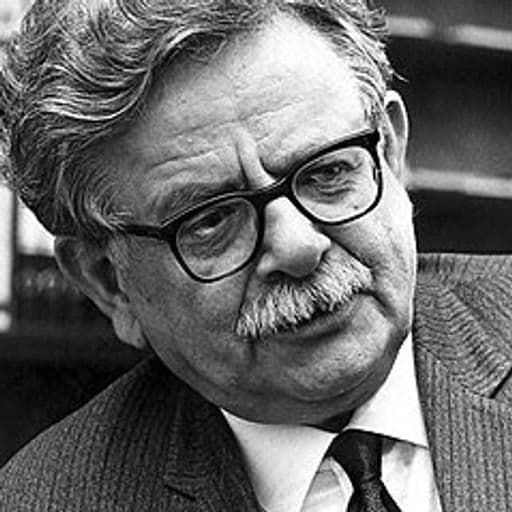
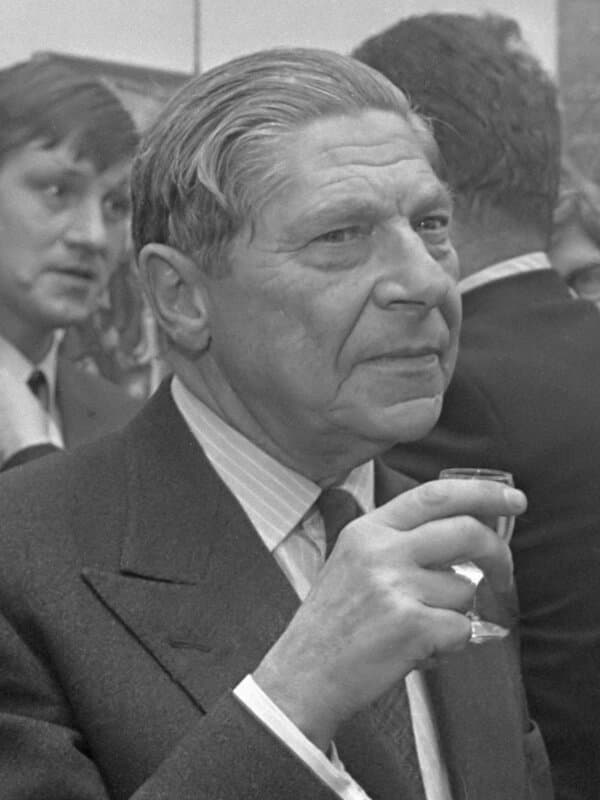
Arthur Koestler
1905–1983
On Arthur Koestler
A brief life
Arthur Koestler was born in 1905 in Budapest and died by his own hand in London in 1983. His life was defined by the turbulent political landscape of the twentieth century, leading him from a youthful commitment to Zionism to a fervent, disillusioned membership in the Communist Party. He survived imprisonment by the Gestapo in Spain and internment by the French, experiences that provided the visceral foundation for his most enduring literary work.
On the page
Koestler is best known for his anti-totalitarian masterpiece Darkness at Noon, which anatomized the psychological mechanisms of the Moscow Show Trials. His bibliography spans rigorous journalism, philosophical treatises on science and creativity, and autobiographical accounts of his political metamorphosis. His writing consistently grapples with the tension between individual conscience and the demands of historical necessity.
In their time
During his lifetime, Koestler was a polarizing figure who commanded immense intellectual influence in the West, particularly among the post-war intelligentsia. While his political novels were hailed as essential documents of the Cold War, his later forays into parapsychology and speculative science were met with intense skepticism and professional derision. He remained a central, if contentious, voice in European political discourse for decades.
The afterlife
Koestler's legacy endures through his profound impact on the literature of political dissent and his role in shaping the Western understanding of totalitarianism. His work remains a primary reference point for studies of ideological extremism and the ethical limits of revolutionary fervor. Despite the controversies surrounding his personal life and later scientific theories, his fiction continues to be studied as a definitive chronicle of the twentieth-century crisis of faith.
Works in the catalogue · 0 entered
The collected
No works yet entered for this author.
Preoccupied with
Recurring motifs



In conversation with